

31 Relaxing With Sheep
In which I get to see a de-stressed mob of sheep really enjoying life in the wheatbelt, near Perenjori, and a working example of great management in the form of a grazing plan. Along the way I come under the spell of the legendary Horse Whisperer, Bud Williams, and learn to curb my cowboy tendencies once and for all as I embrace the ancient concept of shepherding, minus the Yee-Ha.
Ancient Chinese saying: Relaxation is who you are. Tension is who you want to be.
PINE RIDGE
I recently got the chance to go and check out a property near Perenjori called Pine Ridge. This had been purchased some years back by Auscarbon as part of a network of properties under an ambitious plan - the Yarra Yarra Biodiversity Corridor. Some 10,000 hectares of mostly degraded Agricultural land that had ceased to be productive under old management styles were going to be repurposed on environmental and social grounds, to be paid for by International Gold Standard, and other, carbon credits.
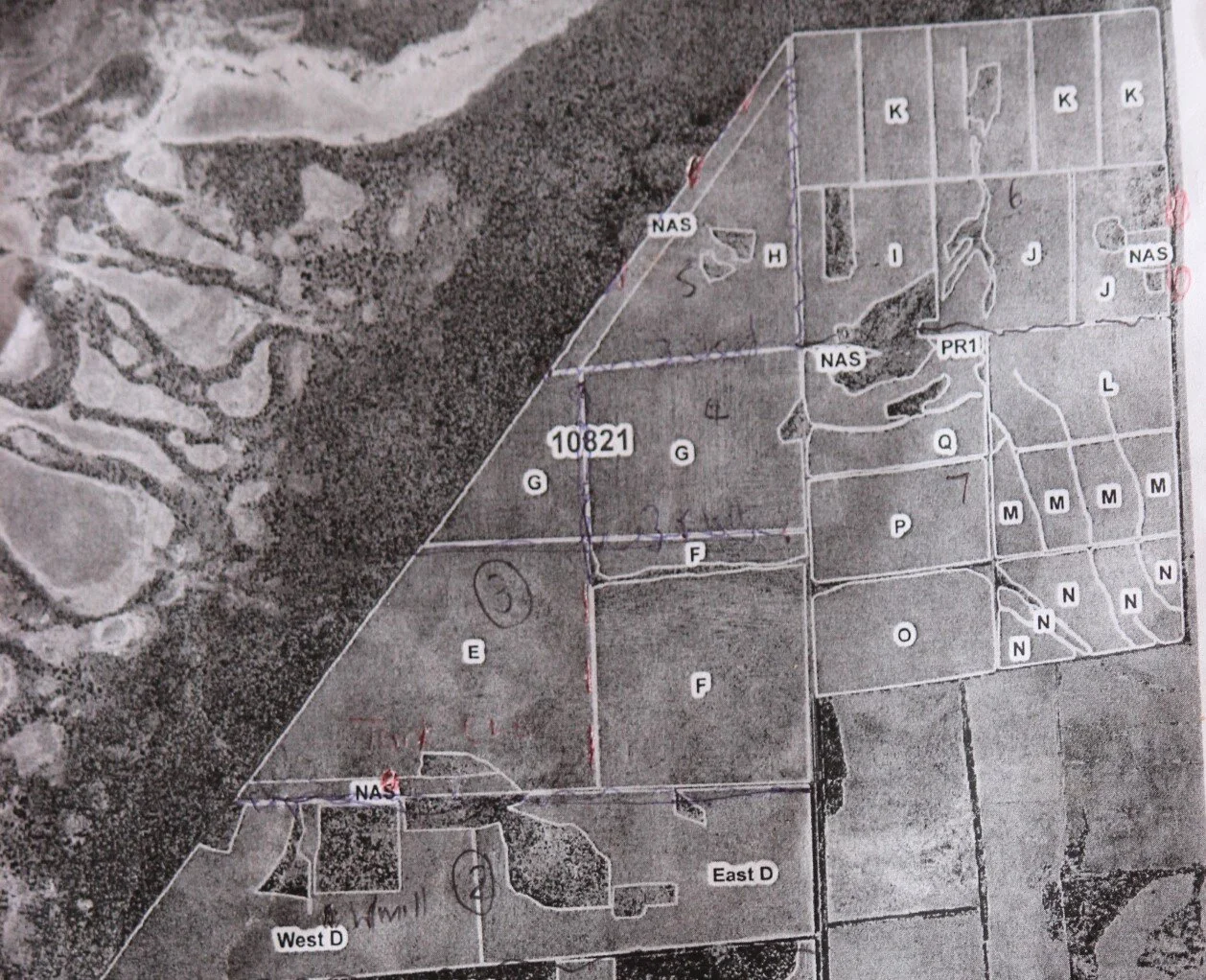
PINE RIDGE THEN
The land holdings are strategically placed to help create natural corridors encouraging the easy passage of insects, reptiles, small mammals and birds in a region that has been cleared of more than 90% of natural bush. Pine Ridge, now managed by Carbon Neutral, covers 3500 hectares and in 2009 and 2010 about two-thirds of the property was planted with local natives – about 30 species all up, mostly acacias. Different enterprises including a beekeeping concern, were launched at this time with the intention to add value to project.
PINE RIDGE NOW
Rod Butler and elder Clint Hansen were part of those early years and ten years on have returned to this land, working in partnership with Carbon Neutral and local workers Phil Logue and Will Hamlet to use sheep to improve the fertility of the land.
Will, working with his young son, Major, when he can be spared from school, have taken on the task of managing this mob. There is a place to stay, a number of paddocks, water points - all are pretty convinced that they can up the ante on the projections for carbon drawdown by employing hi-density, short-term grazing techniques with a grazing program that will, as Rod puts it, ‘wake up’ the country.
THE SHEEP PROJECT
Rod and Will have known each other for a while now. Will worked with Rod for some years as a shearer, they have long histories with working with sheep; both get the principles of stress-free stock work. There is a quiet alliance forming here based on trust and shared direction that bodes well for the operation.
THE PLAN
What are the aims here? For a start, Rod is convinced that carbon soil sequestration within the framework of a living system, means that carbon capture figures can be exponentially improved by intensive grazing and more plantings. To boost his sheep’s nutrition intake and demonstrate this thinking, he has introduced a modest program of mixed grain seeds between the rows over a handful of hectares.
Lupins were dropped as a lure for the sheep in 3 sites over some of the poorest country and Rod expects the remaining annuals, wheat, oats and barley, will be trampled into the ground, to grow. He also sprayed a small area with biological solution left over from his own sowing program at Gimlet Ridge Farm to help kick-start microbial life below ground. Small do-able experiments to extend learning for himself and the company hosting his sheep.
The carbon mob are happy to have more carbon captured. The figures modelled on the trees and shrubs over a 50-year period, already look good to them. According to Ray Wilson, the CEO of Carbon Neutral, they expect this planting to sequester up to 390,000 tonnes of CO2e per ha over the next 50 years. In terms of emission reduction, this is equivalent to taking 85,000 to 100,000 cars off the road for 1 year. The prognoses for soil carbon sequestration, using biodiverse planting and managed grazing promise much bigger financial and environmental gains.
Nature, indifferent to any pandemics and economic slumps at play, has of course, just continued to clothe bare earth with whatever seeds it can help to hatch. The coming of the rain has seen local pioneers like salt bushes, native grasses, Marianas, and the fluffy mulla mullas pushing up in the cleared areas between the lines of plantings.
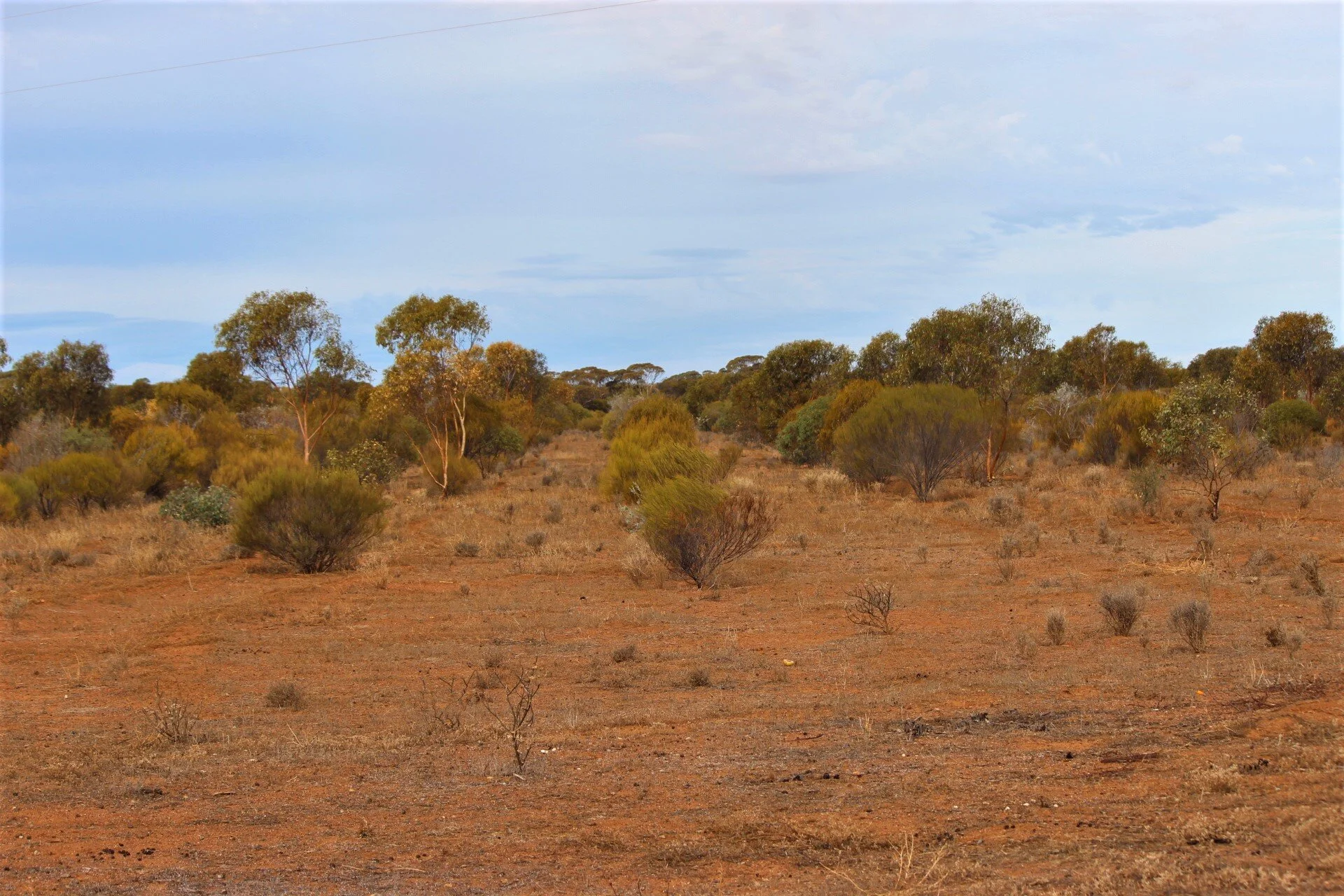
Pie Ridge plantings
All parties agree that Pine Ridge is a potential font of good stories that can continue to connect restorative ecological practises to financial gain through the medium of selling carbon credits. Carbon Neutral plans to get more companies on board, plus keep good the relationships already established with businesses who signed on with them years ago – keen to do the right thing by offsetting their carbon debt.
WHEN TWO CULTURES MEET
There is the plan, and then there is the stuff that happens when a plan rolls out and meets real life. From Rod’s perspective, he is finding unexpected depth and interest in the evolving relationship with Will, the sheep and the land. Will is an Aboriginal man connected to the country around Cue, deep into the Southern Rangelands, who has had a long history with sheep and farming. Rod, of settler background, strongly rooted in the farming country around Perenjori, is finding that their cultures are intersecting in interesting ways and is keen to explore what they can learn from each other.
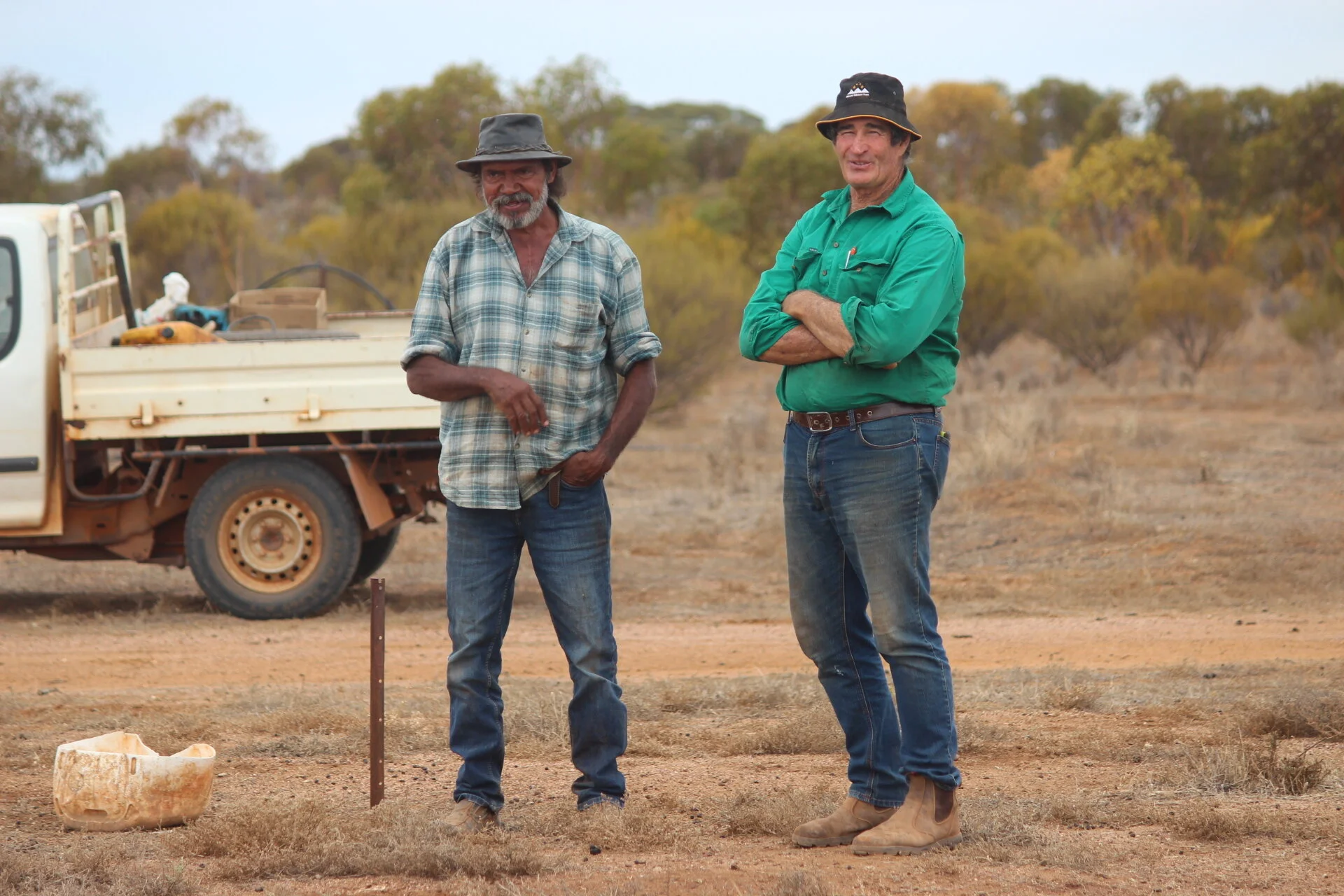
Will and Rod
THE NEW SHEEP LEARNING
Rod has put in a fair bit of study to do with stress-free stock work. When he was feeling his way out of conventional farming practices, looking for new ways to do things, he hooked up with the KLR Marketing people. This was a company started by three men who threw out the rule book when it came to stock management. Under their influence, Rod started thinking about his sheep business differently, paying more attention to the realities of the market, working his sheep differently, and closely observing the impact of grazing on landscape health.
None of this sounds too revolutionary on the page. But over the years it has challenged generations of baked-on ‘wealth-from-the-sheep’s-back’ thinking that is still out there – albeit operating in a much more impoverished social, economic and environmental context.
BUD WILLIAMS
When I checked out the KLR Marketing web page the first thing that came up was a heart-felt tribute to Bud Williams from the KLR men and their families. I’d heard Rod rave about Bud, the legendary horse whisperer, so followed the clues and ended up finding a 40-page document on the net called A Workshop on Stockmanship by Bud Williams. https://managingwholes.com/downloads/bud.pdf
This document is riveting. Reading it, you get the sense of a simple man of great good humour and wisdom who found it easier working with animals than people - with the exception of his beloved wife, Eunice. But the people who work with stock, end up having to work with people and there are a few interactions where he allows himself a few head-shaking moments at the orneryness of the human species.
Bud’s treatise is plainly written and occasionally, laugh out loud funny: for me it read as a masterclass on how to live life. Here is a quote that sort of sums up the trouble he had working with people, trying to get them to see what needs to be done to get animals working with you, rather than against you:
YOUR MIND IS NOT ON WORKING THE BULL
If we go out here and get these cattle working for us, we can put them anywhere. When you go to put that bull in the trailer, that’s what your mind is on. Your mind is not on working the bull, it’s on the trailer. So he goes to the pond. ….
How down-home is that? I really wish I could do accents; I bet he had a beauty. But I can’t so I’ll spare you. Here is more of Bud’s wisdom: Now here’s one of the things that you want to keep in mind when you’re working any kind of animal. They will tell you exactly where they want you to be, to get them to go where you want them to go. If you have an opening over there, and you want an animal to go through that opening, he will tell you exactly where you need to be to put him through that opening, assuming you pay attention.. P8/9
PRESSURE ON/PRESSURE OFF
Reading Bud’s treatise, I understood a bit more – theoretically at least – about what Rod means when he talks about pressure/release points when working with animals.
I’ll try and give you the gist. Always walk or ride in straight lines towards herd animals – they don’t take with being approached in arcs – it is too much like predator behaviour. By approaching them, you put on a bit of pressure to get them to move along. Watching their actions, they will tell you when they are starting to get uncomfortable with what you are doing. Stop instantly, release that pressure, either by letting the animal move away, or by you moving away. If you consistently apply pressure, instantly releasing it when the animal shows that it is uncomfortable, you are pretty much creating trust. (Bud p16)
As a corollary to the ‘too much pressure’ Bud says that: We’ve taken a herd animal, and over the years we’ve made a herd a bad place to be.(p17)
He uses an example, often seen in his working life, of mobs acting up and panicking as they are moved into small yards. He notes it is not that cattle or sheep mind being put as a mob into small yards, it is just the way it is done that teaches them instant panic.
THE ALLAN SAVORY EFFECT
Rod and Will know the sheep need to work as a mob. The herd formation helps against predators and the intense grazing and short-lived trampling and fertilising action of the moving mob, interspersed with long rest periods of the land, keeps fragile landscapes alive in a constant cycle of animal action, living soil and plant rotation. Rod credits Allan Savory’s insights about the relationship of predators, grazing herds and land fertility as a big part of the way he thinks about his farm business.
BRUCE THE TEACHER
Listen to me carry on! How easy is all of this eh? Theory is a wonderful thing. When I was at Edah Station, east of Geraldton, we were lucky enough to do a few workshops with Bruce Maynard, a cattle man from NSW. He has developed some winning ways with animals via his own developments of stress-free stockperson-ship. ( And yeah, I know its clumsy, ‘stockpersonship’, but I can’t seem to do the old language comfortably anymore, either, so you’ll have to suffer stuck the new clunky.)
Watching Bruce work the sheep was cool, watching him work the audience was even better. There was always a bloke, a farmer or a pastoralist, standing a bit apart – arms crossed, legs wide – who had a go at him. And I mean belligerent ‘stop teaching your grannie how to suck eggs’ kind of a go.
I quickly learnt Bruce is a world-class listener. Whenever someone started to speak, he instantly stopped and gave his full attention to the talker. Pressure on/pressure off. I saw him copping abuse that could have blown his hat off, and dealing with it by paying complete attention to the abuser. He didn’t react, just waited for the storm to pass and responded as best he could, thoughtfully and politely. Every time. I bet you Bud was the same.
I learnt from Bruce Maynard’s workshop that de-stressing animals, apart from making them easier to handle, also gives them the confidence to experiment more with the food they eat. There are excellent YouTube videos where you can watch sheep, usually led by the older ewes, nibbling on thistles and other less-than-delicious plants. Like humans, when they feel comfortable in their situation, they are happier to expand their horizons and try new things. This of course, is good for their digestions and helps stimulating paddock biodiversity.
YEE-HA!
If I had any larnin’ in this working with animals’ zone it was from the dust-raising school of ‘a-whoopin’ and a-hollerin’, cowboy-style. I know enough to say that theory and practise are two different things when it comes to herding anything. I would need many hours in paddocks and yards with actual animals to develop the level of observational skill, patience and sensitivity to animals that underlies effective work with stock.
RELAXED SHEEP
Which brings me to the point of this story: the grazing plan. Rod, his wife Katrina, their niece, Gaby, Phil Logue and I went out to Pine Ridge to confer with head shepherd, Will. Rod and Will wanted to develop a grazing plan.
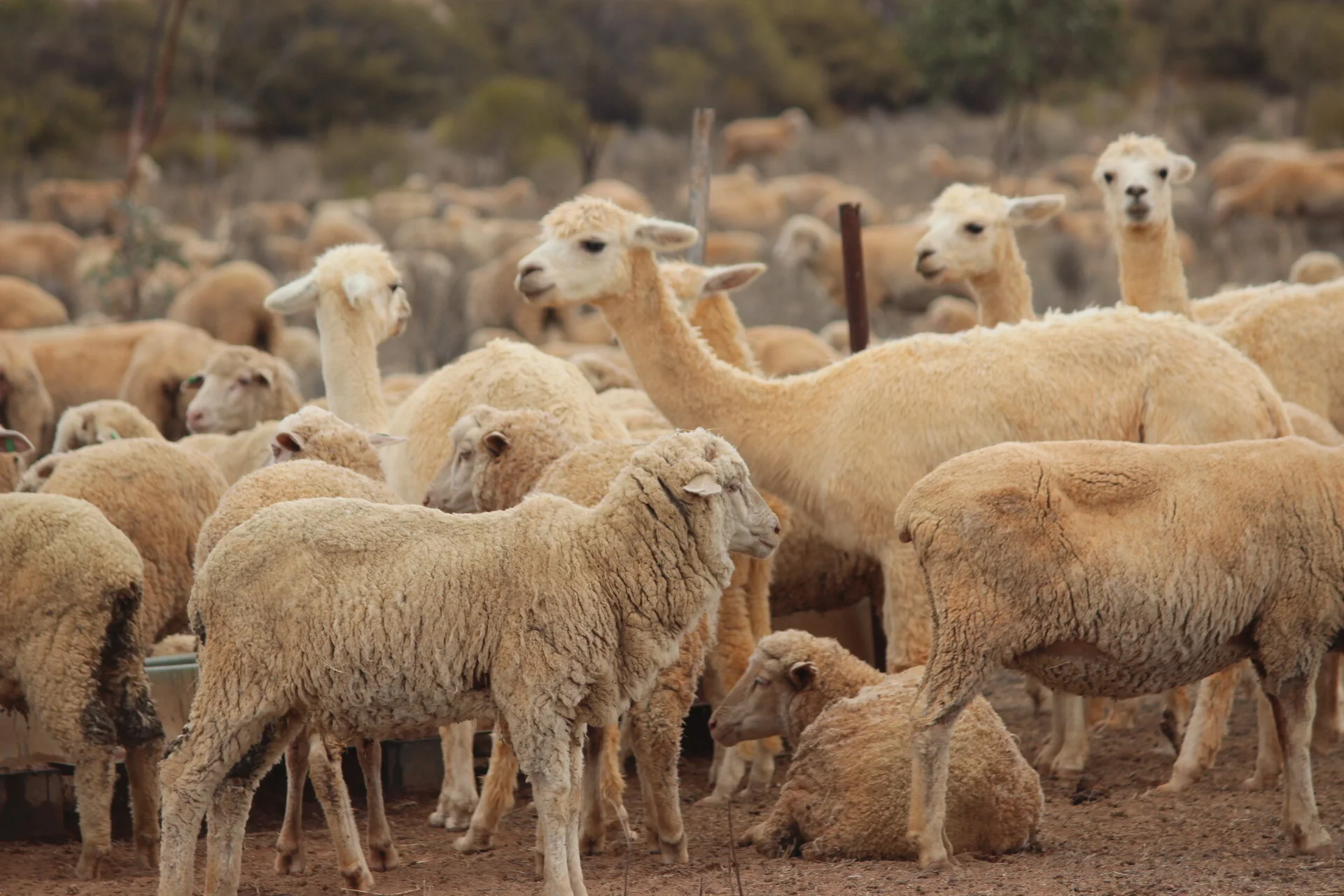
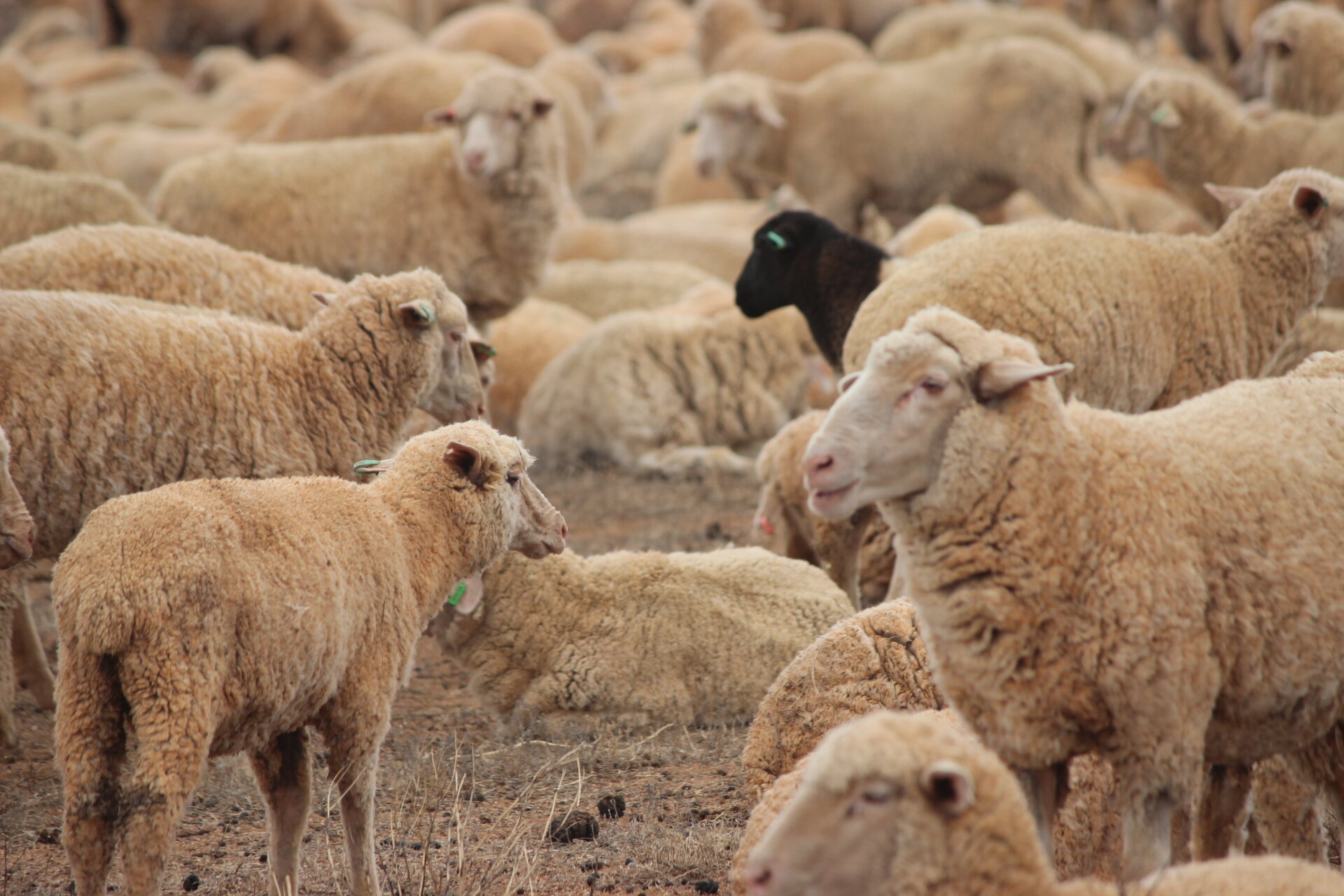
First up, we came across the mob of sheep at a water point. Talk about relaxed. They weren’t worried about us, it was afternoon lounging time and these animals, including a little batch of alpacas, had clearly learnt to trust their humans.
THE WHITEBOARD
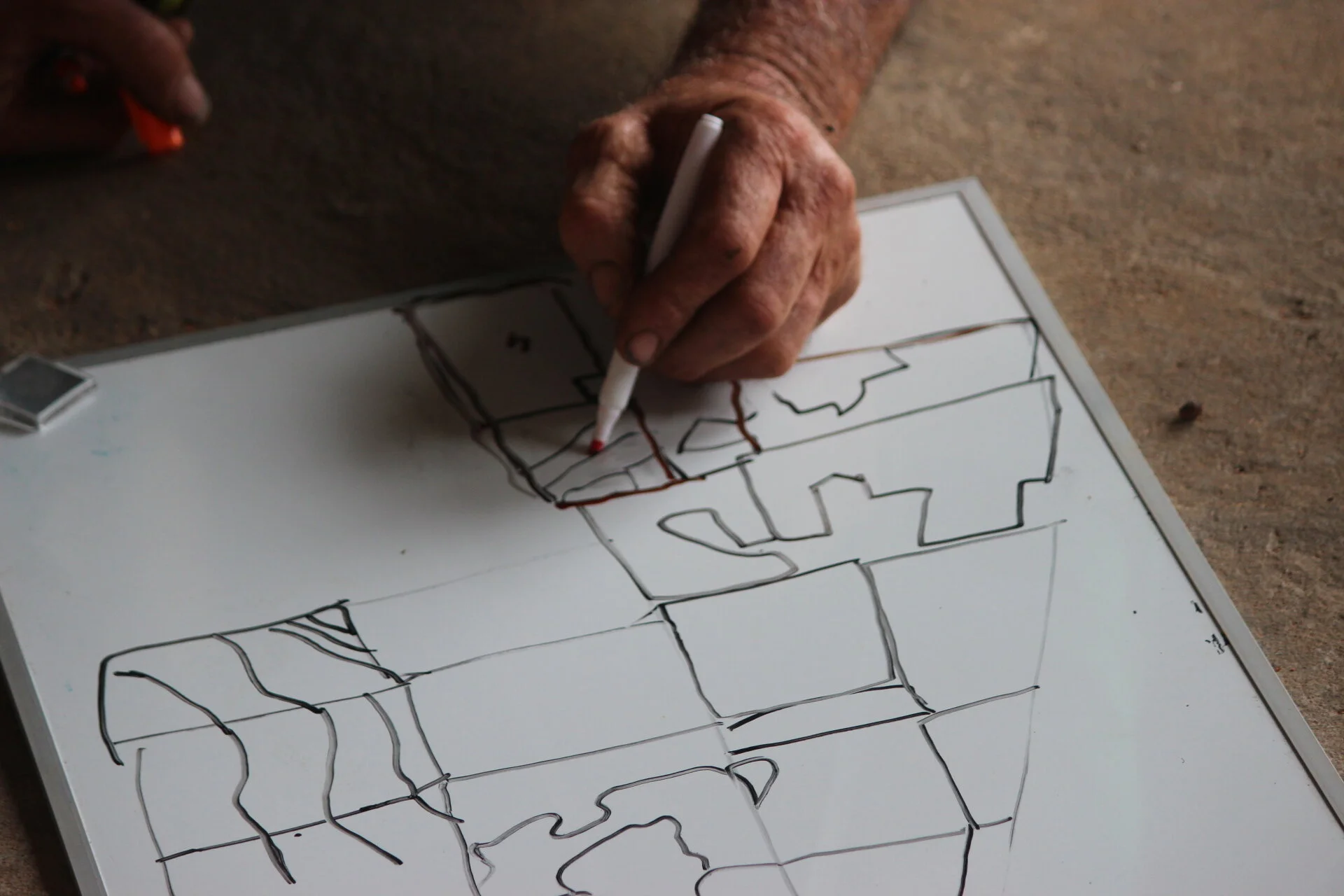
Will rocked up a bit later and we repaired to the shade of a shed where Rod pulled out a white board and a map of the property and got Gaby to sketch up a rough outline of the main paddocks.
The grazing charts come to us courtesy of Allan Savory’s Holistic Management institute. They have been developed as an aspect of a decision-making process that has been rocking the world of Agriculture for over three decades. Rod is a certified trainer and a fan of the tools Holistic Management offers. They are aligned to bring the context, the goals and the needs and wishes of all the players involved in a project, under consideration.
THE CONSIDERATIONS
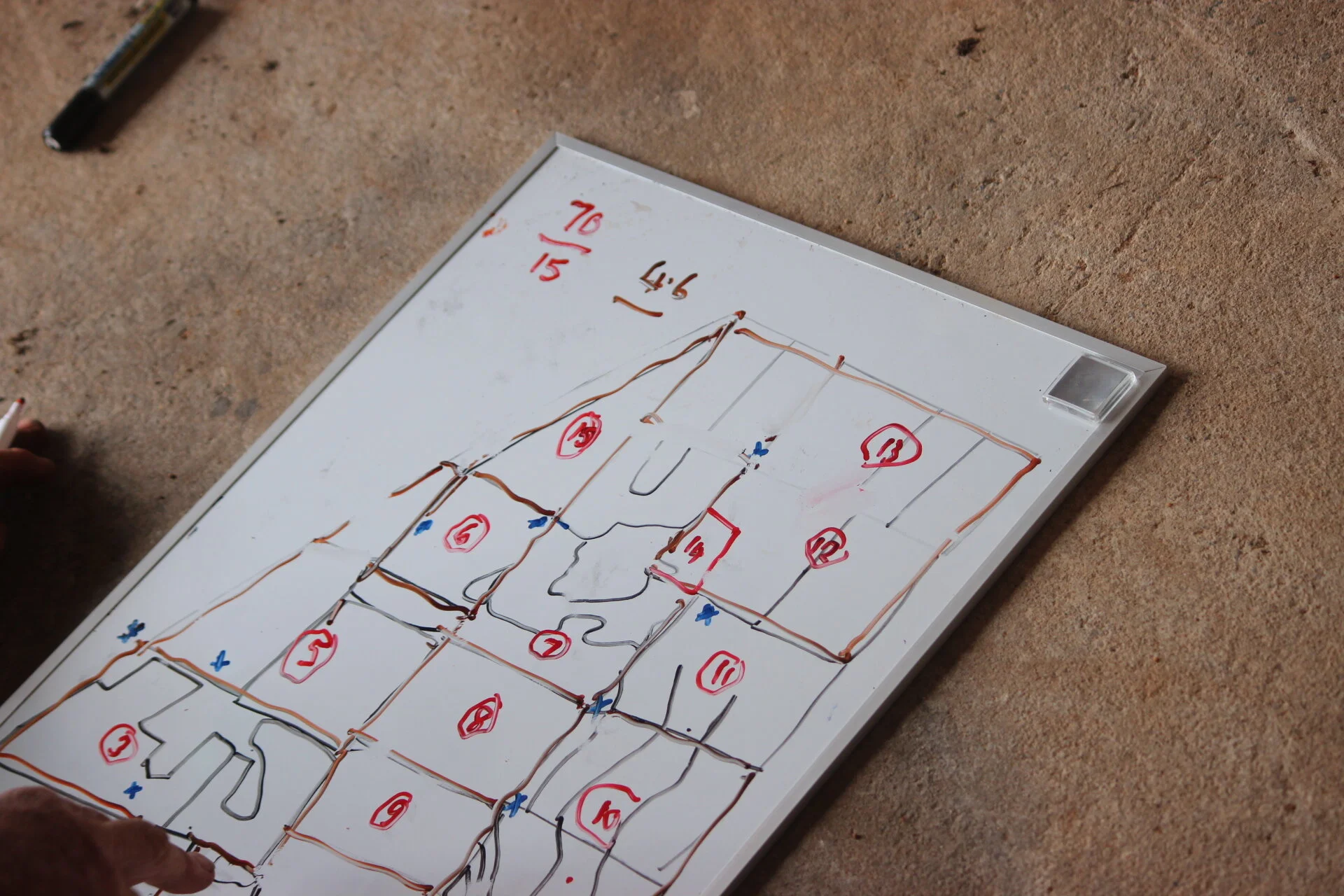
To get things moving Rod explained that he and Will had to manage the land for over two months of grazing – say 70 days – and there were 15 paddocks. Thus 70 over 15 was the major calculation to work with.
Starting the plan
The sheep were coming up to lambing, this could be expected to be staggered over 4-6 weeks starting in a week or two. This was a consideration, as was the expectation of reasonable rains in late autumn into winter that would affect plant growth and feed levels. Grazing charts can get very complex when you factor in the expected and unexpected events in life. Anything that affects those working the land, holidays, community festivals, family duties has to be considered: as you can imagine a grazing chart must be flexible.
TWO MINDS
Watching Rod and Will work was great. Rod started by pointing at the first paddock the sheep were to be moved to: what do you reckon, Will? Three days? Four? Will looked a bit doubtful and said something like: urr, it’s a big paddock, and Rod nodded and said: Yeah, yeah you’re right. Let’s call it 5 days.
This went on until they had numbers in all 15 paddocks. One paddock with more natural bush in it was chosen over another possible paddock as the days counted up, so the majority expected to be dropping lambs would get the extra cover for protection from eagles and the expected predations of wild dogs and dingoes.
Amazing to me, was that when Rod added up the 15 figures at the end of this relaxed almost wordless process, they came to 70. He laughed, not so surprised: funny how that seems to work out.
THERE IS A PLAN!
Well, they got the grazing plan! What seemed to me like an incredible act of conjuring – to try and imagine what 1800 sheep would eat on a large property over a few months notwithstanding complex and changeable biological, topographical and climatic conditions was made simple and understandable in under 30 minutes in a shed with a white board and a marker.
RELAX THE SHEEP RELAX THE PERSON
The grazing plan
There is a feeling in the Pine Ridge camp that there might be something worth pursuing here. Relaxed sheep breed relaxed people. There have been discussions about how to introduce the idea of shepherding as a way to connect people to country and to themselves.
Working with animals is a proven way to heal broken lives – I am thinking of the inspirational work being done by the BackTrack Youthworks program in rural NSW under founder Bernie Shakeshaft. Since 2006 he has been taking on kids considered unteachable by the usual societal measures.
His first action is to introduce each young person to a dog from the local pound. Watching these people befriending, training, working with their dogs over weeks and months is to watch them come to life in a magical way. Please watch the doco, Backtrack Boys, you’ll love it.
The kind of learning you could get from walking with a mob of sheep is not something currently on offer at Ag. Schools or TAFE. Rod and his mob are keen to create a model that could be of benefit to people, animals and the land.
This is like coming full circle, isn’t it? Shepherding was the way workers carved out a living for themselves in the early years of the Swan River colony. Caring for a flock of sheep, taking them to pasture, was a way to make a living where payment was often taken in the form of a percentage of the lambs born. With wool and pasture-fed meat coming back into focus as valuable fibre and food, could this be one of the ways we develop to revitalise the Rangelands – the Ranger program with tangible economic as well as social and environmental outcomes.
RECOMMENDED PRIOR LEARNING
Writing this I started to understand that the planning process I witnessed was fed by deep knowledge. Both Rod and Will understand what this land offers and have a keen sense of how animals behave. We can assume that years of experiential knowledge was feeding into intuitions finely attuned to the land we were standing on. What stands behind Rod is a handful of generations and a lot of applied learning from books and different mentors – what Will understands – well, that’s a story isn’t it?
Rod is curious to find a way to work with Will that transcends the zones where First Peoples/colonists tend to get stuck.
WHAT I KNOW
For me, it was one of those great ‘ahha’ moments. The world of Holistic Management and one of its tools, the grazing chart, swam into proper focus. Plus, the potential for this land and all who dwell on her, to blossom under new ways, in alignment with ancient ways, of doing things, is exciting. Trust; a shared vision; time, and a mob of sheep peacefully doing their thing is a promising place to explore what I would call one of these expansive and unknown third ways.
FAMOUS LAST WORDS
Let’s give the last words to Bud, who has a good handle on what people need to do to allow a herd of animals to move without drama:
If we can get to the point where we’ll move over to what we need to do, and forget about what we want to do, this will work a lot better. https://managingwholes.com/downloads/bud.pdf

